Where the money goes in a canvas tote#
Buyers often compare two quotes and wonder why one is 40% higher. Usually the bags are not the same: different fabric weight, a bigger print, or freight included in one and not the other. Here is how the cost of a typical 10 oz printed tote breaks down in our factory.
| Cost component | Share of unit price | What changes it |
|---|---|---|
| Fabric | 35–50% | Weight (oz/GSM), width usage, dyed vs natural, organic/recycled |
| Printing / branding | 10–30% | Method, number of colours, print size, number of print positions |
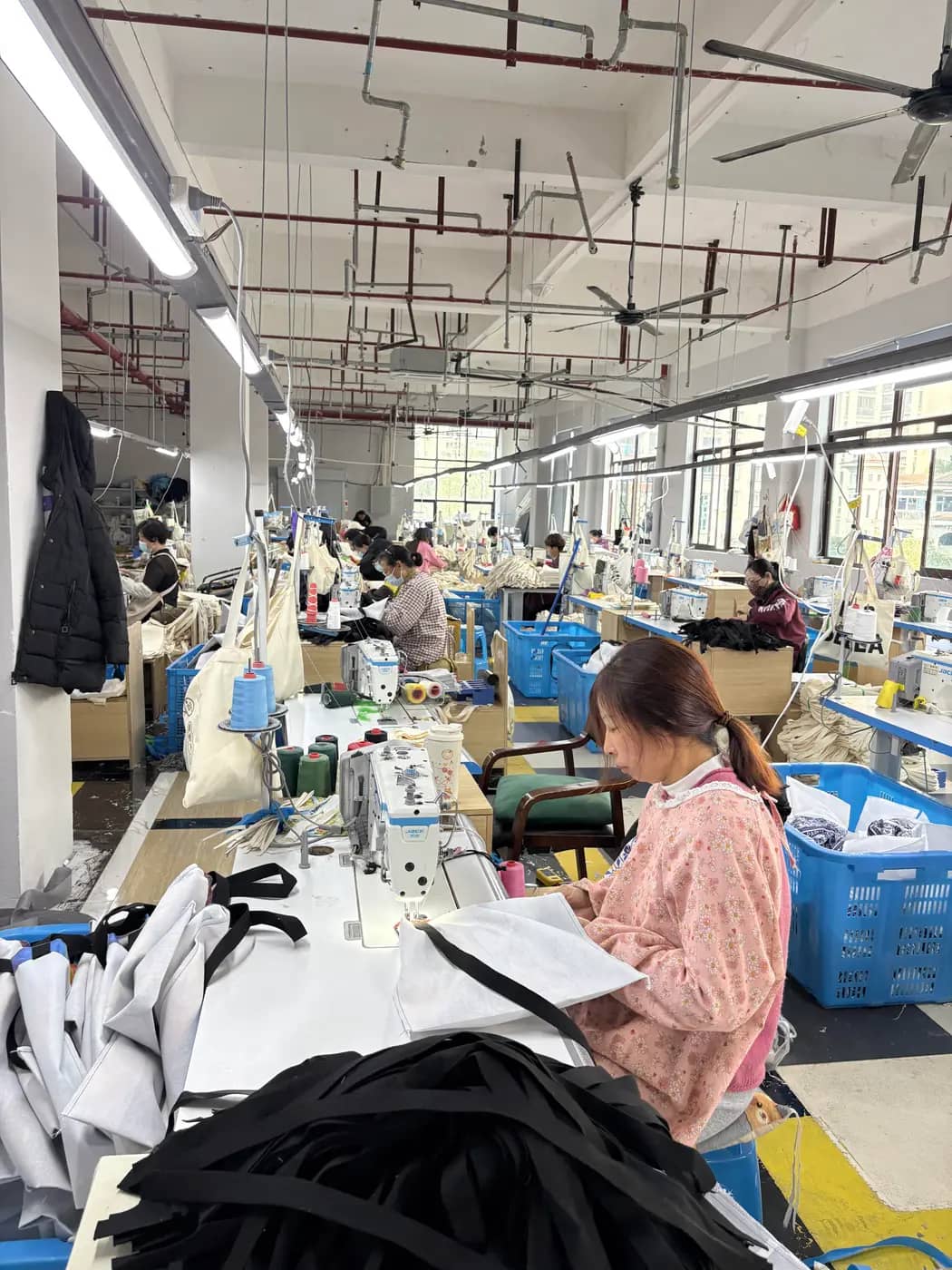
| Sewing labour | 15–25% | Gusset, pockets, zipper, lining, handle type |
| Accessories & trims | 0–20% | Webbing, zipper, snaps, leather patch, labels |
| Packaging | 2–5% | Bulk vs individual polybag, hang tags, carton type |
| Overheads & margin | 10–15% | Order size and complexity |
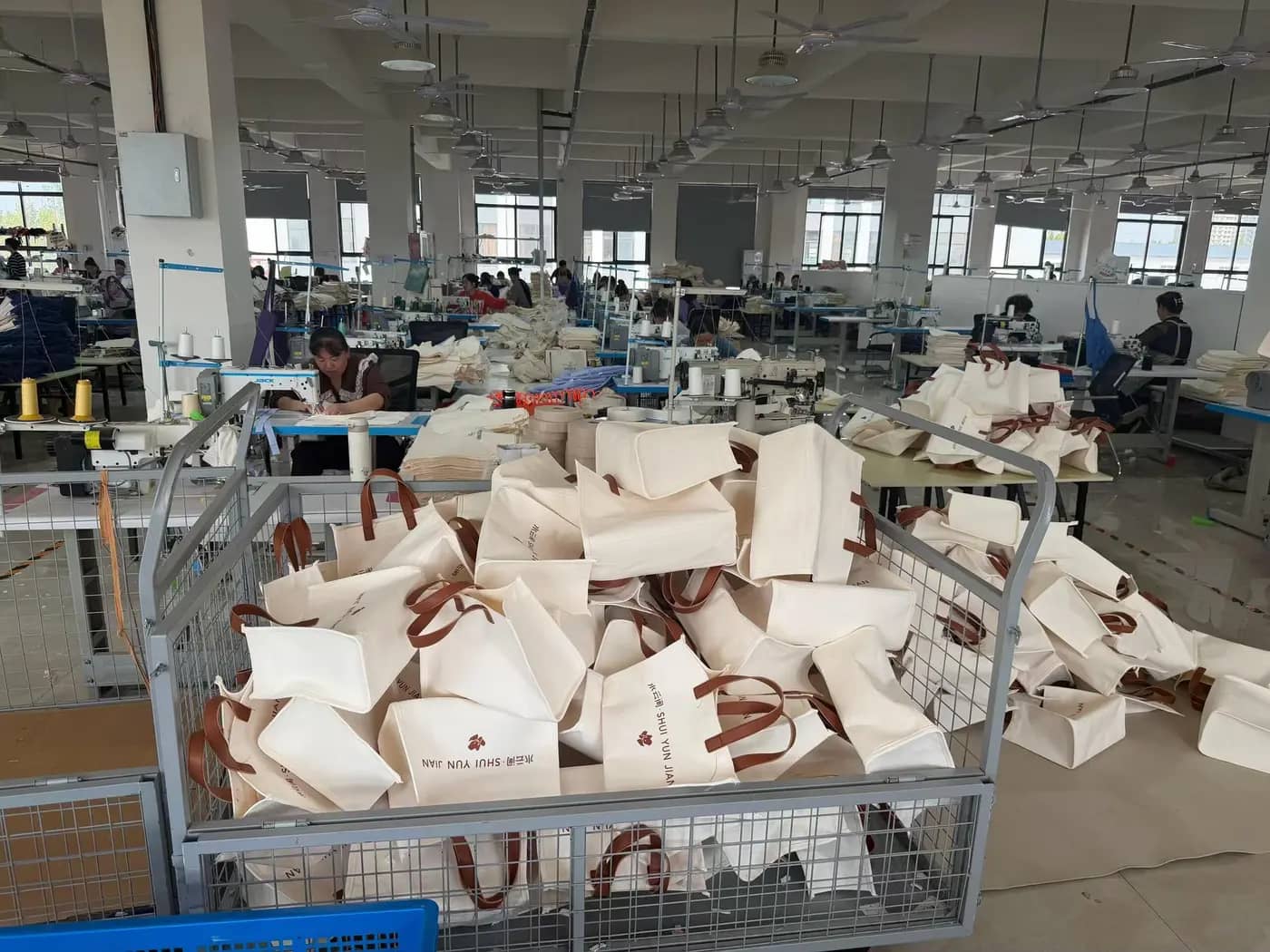
Fabric weight and bag size#
Because fabric is the biggest cost, the two biggest levers are weight and size. Moving from 8 oz to 12 oz canvas typically adds 15–25% to a simple tote. Adding a 10 cm gusset uses noticeably more fabric than a flat bag of the same face size. Dyed or certified fabrics (organic, recycled) cost more again.
Printing and branding#
| Choice | Price effect |
|---|---|
| 1-colour screen print, one side | Baseline |
| Each extra screen colour | + setup per colour, small unit increase |
| Second print position (back side) | + another full print cost |
| Full-colour DTF transfer | No setup; higher unit cost on large runs |
| All-over digital print | Highest print cost, but replaces other branding |
| Embroidery | Priced by stitch count |
| Leather patch | Moderate unit cost, premium perception |
For a detailed comparison of methods, see screen printing vs DTF vs sublimation.
Construction and accessories#
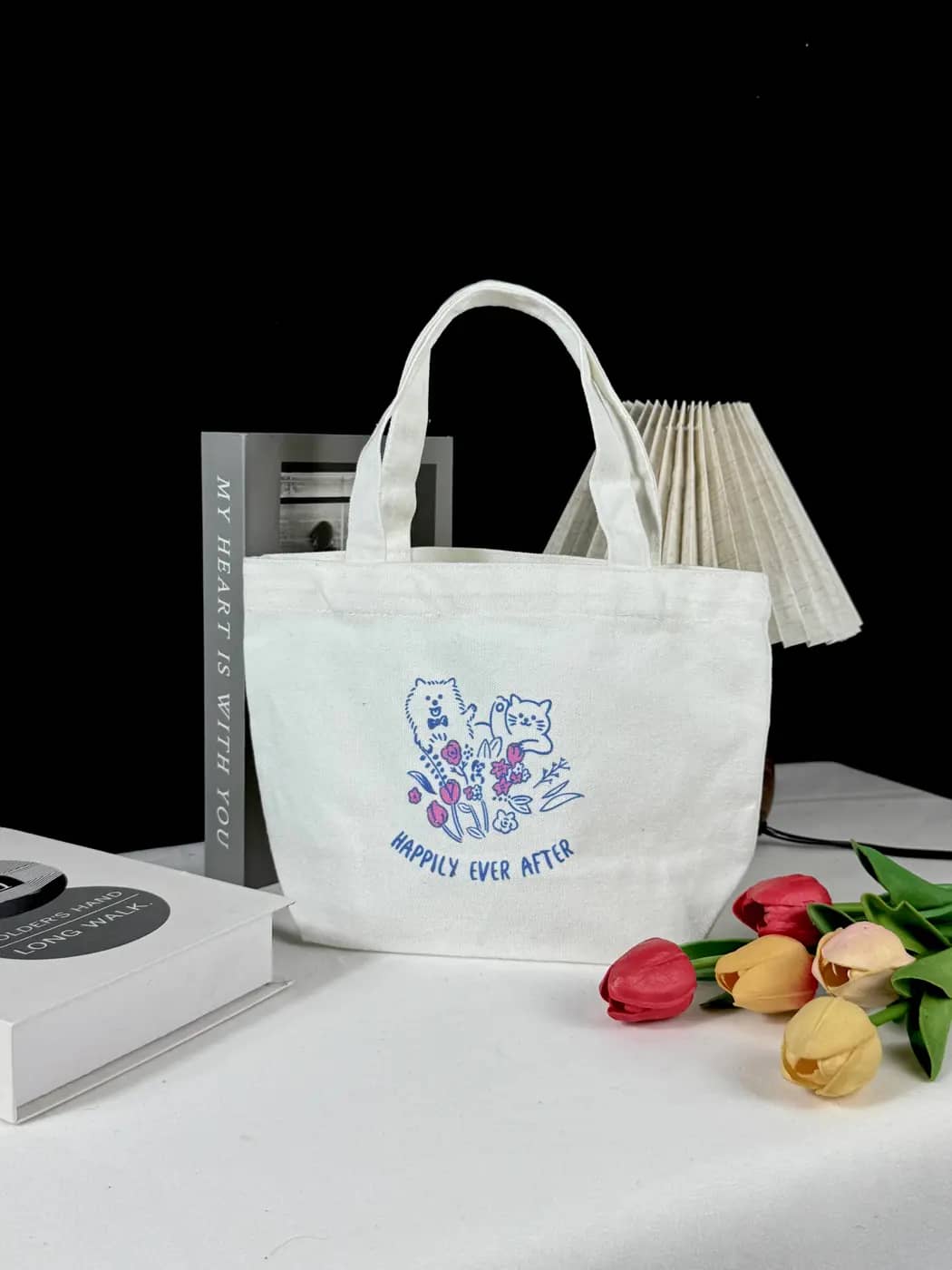 Simple tote
- Flat or small gusset
- Self-fabric handles
- Open top
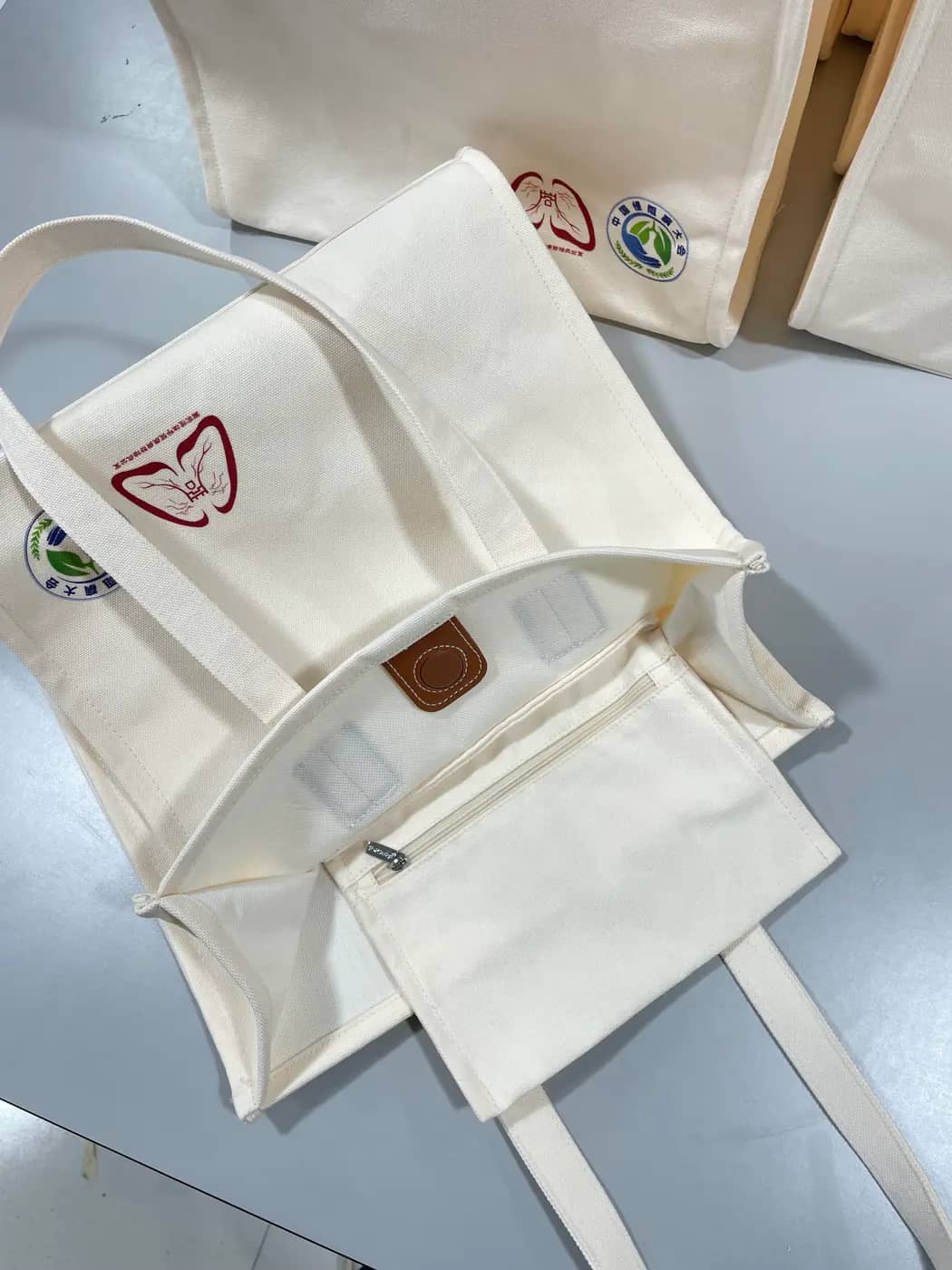 Feature-rich tote
- Zipper + inner pocket
- Wide box gusset
- Leather patch
| Feature | Typical increase |
|---|---|
| Magnetic snap | +3–6% |
| Inner slip pocket | +5–8% |
| Zipper closure | +12–20% |
| Full lining | +15–25% |
| Leather / PU patch | +8–15% |
| Colour-matched webbing handles | +5–10% |
Quantity: the biggest price lever#
Setup work — patterns, screens, machine changeovers, sampling — is the same for 300 or 3,000 bags. Spread over more pieces, it almost disappears. This index shows how a typical unit price changes with quantity (300 pcs = 100).
| Quantity | Unit price index | Saving vs 300 pcs |
|---|---|---|
| 100 pcs | ≈ 130–150 | — |
| 300 pcs | 100 | — |
| 1,000 pcs | ≈ 72–80 | 20–28% |
| 5,000 pcs | ≈ 60–68 | 32–40% |
| 10,000+ pcs | ≈ 55–62 | 38–45% |
From factory price to landed cost#
- 1
EXW price
Bags ready at the factory
- 2
+ Local transport
To port / airport (FOB)
- 3
+ Freight
Sea, air or express
- 4
+ Duty & taxes
Based on HS code
- 5
= Landed cost
At your door (DDP)
Each step is defined by the Incoterms® rules. If one supplier quotes FOB and another DDP, the DDP price will look higher but may be cheaper overall. Import duty depends on your country and the product's HS code — US buyers can look up rates in the Harmonized Tariff Schedule.
- freight + duty on top of factory price (typical)
- 15–30%
- weight of a 10 oz, 38 × 42 cm tote
- ≈0.13 kg
- flat totes per standard export carton
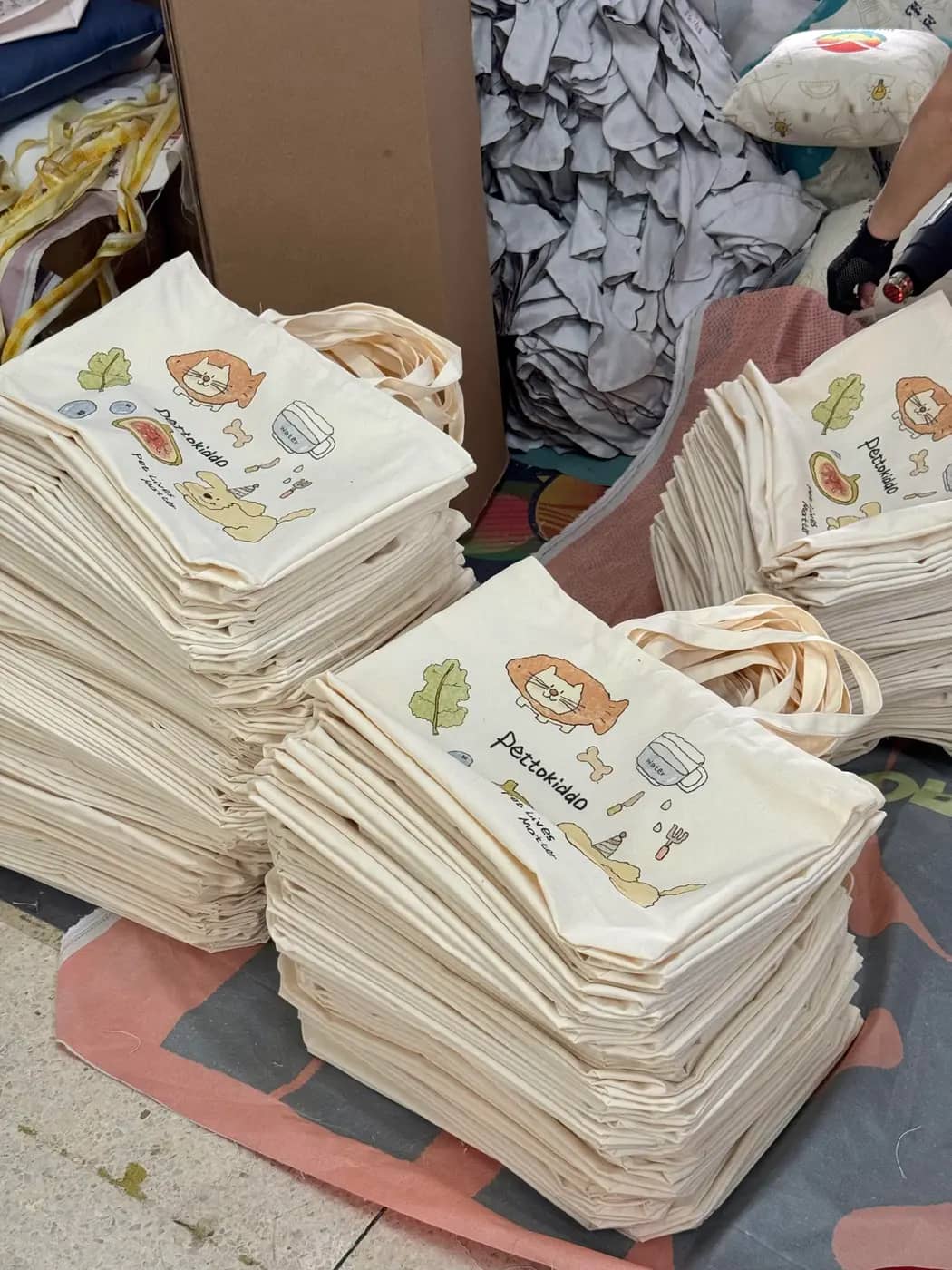
- ≈250 pcs
- holds roughly 2,000–3,000 flat totes
- 1 CBM
Video
Watch: what sewing time looks like
Every extra seam, pocket and handle adds seconds per bag — multiplied by thousands of bags.
9 ways to lower your unit price#
- 1Order once for the year instead of several small runs.
- 2Use natural (undyed) canvas — dyeing adds cost and lead time.
- 3Reduce print colours, or switch a gradient to a solid-colour version.
- 4Print one side instead of two.
- 5Keep handles in self-fabric instead of separate webbing.
- 6Choose a standard size the factory already has patterns for.
- 7Accept bulk packing instead of individual polybags when the bags go straight to an event.
- 8Book sea freight early instead of air freight late.
- 9Ask for two options in the quote — your spec and the factory's value-engineered alternative.