What does "oz" mean for canvas?#
Canvas weight is usually quoted in ounces per square yard (oz/yd²). The higher the number, the denser and thicker the cloth. Most of the world outside the US uses grams per square metre (GSM) instead, and the conversion is simple: 1 oz/yd² = 33.9 g/m².
Weight is only part of the story. Two 12 oz fabrics can feel different because of yarn count, weave tightness and finishing. That is why we always send buyers a physical swatch alongside the quote.
- g/m² in 1 oz/yd²
- 33.9
- range used for most custom totes
- 8–16 oz
- normal weight tolerance between fabric rolls
- ±5%
- to get a physical sample in your chosen weight
- 5–7 days
Canvas weight chart: oz to GSM#
| Weight (oz/yd²) | Approx. GSM | Feel | Typical tote use |
|---|---|---|---|
| 6 oz | ≈ 205 | Thin, very soft | Lightweight cotton shoppers, inner linings |
| 8 oz | ≈ 270 | Soft, foldable | Trade-show giveaways, conference bags |
| 10 oz | ≈ 340 | Medium, holds a light shape | Retail bags, bookstores, everyday merch |
| 12 oz | ≈ 405 | Firm, structured | Premium merch, zipper totes, gift bags |
| 16 oz | ≈ 540 | Thick, stands on its own | Heavy-duty shoppers, laptop & shoulder totes |
| 18–24 oz | ≈ 610–815 | Very stiff, almost board-like | Tool bags, workwear, structured fashion bags |
Light vs heavy canvas at a glance#
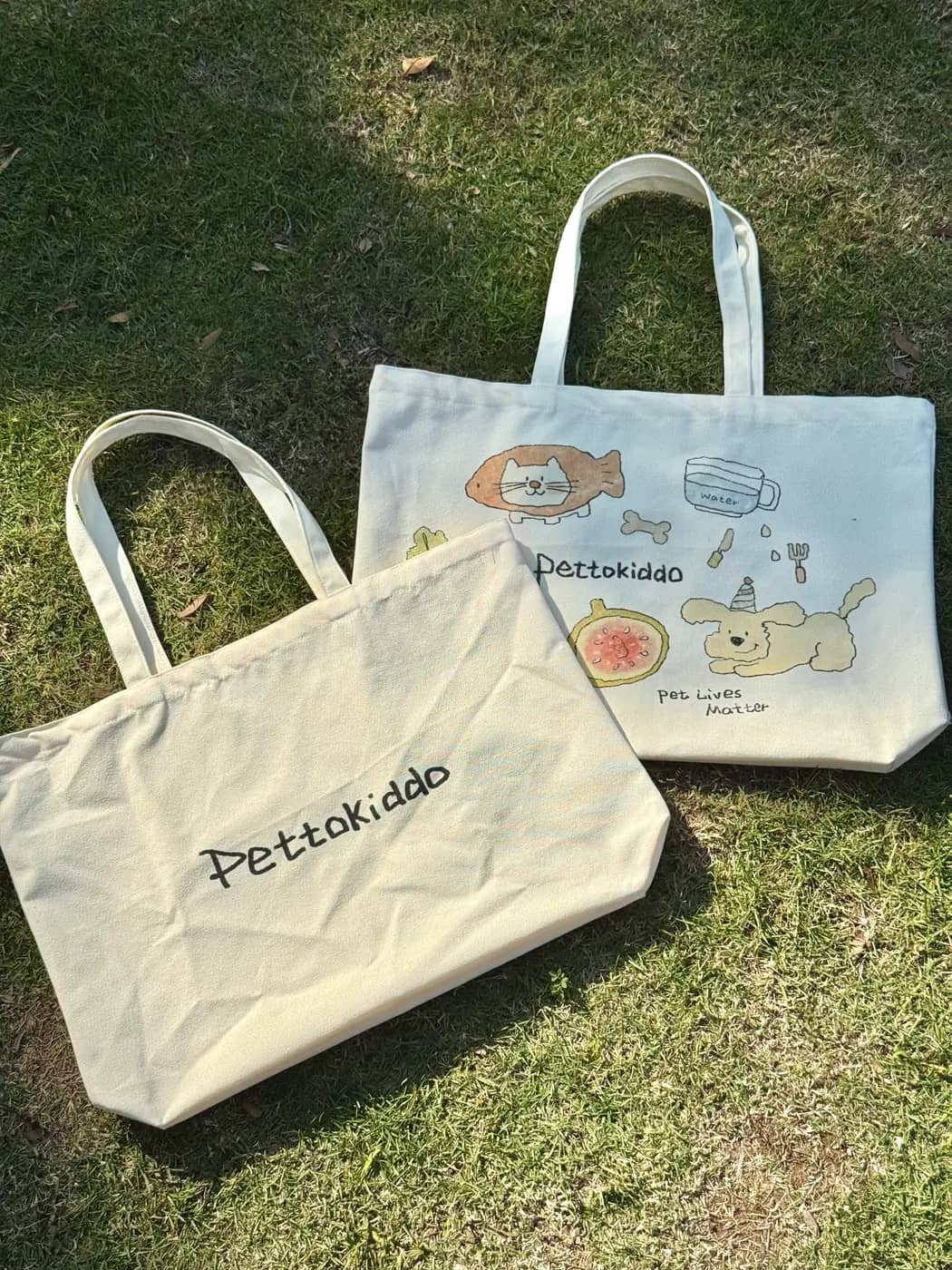 8–10 oz
- Soft drape, folds flat for mailing
- Lowest cost per bag
- Ideal for large giveaway runs
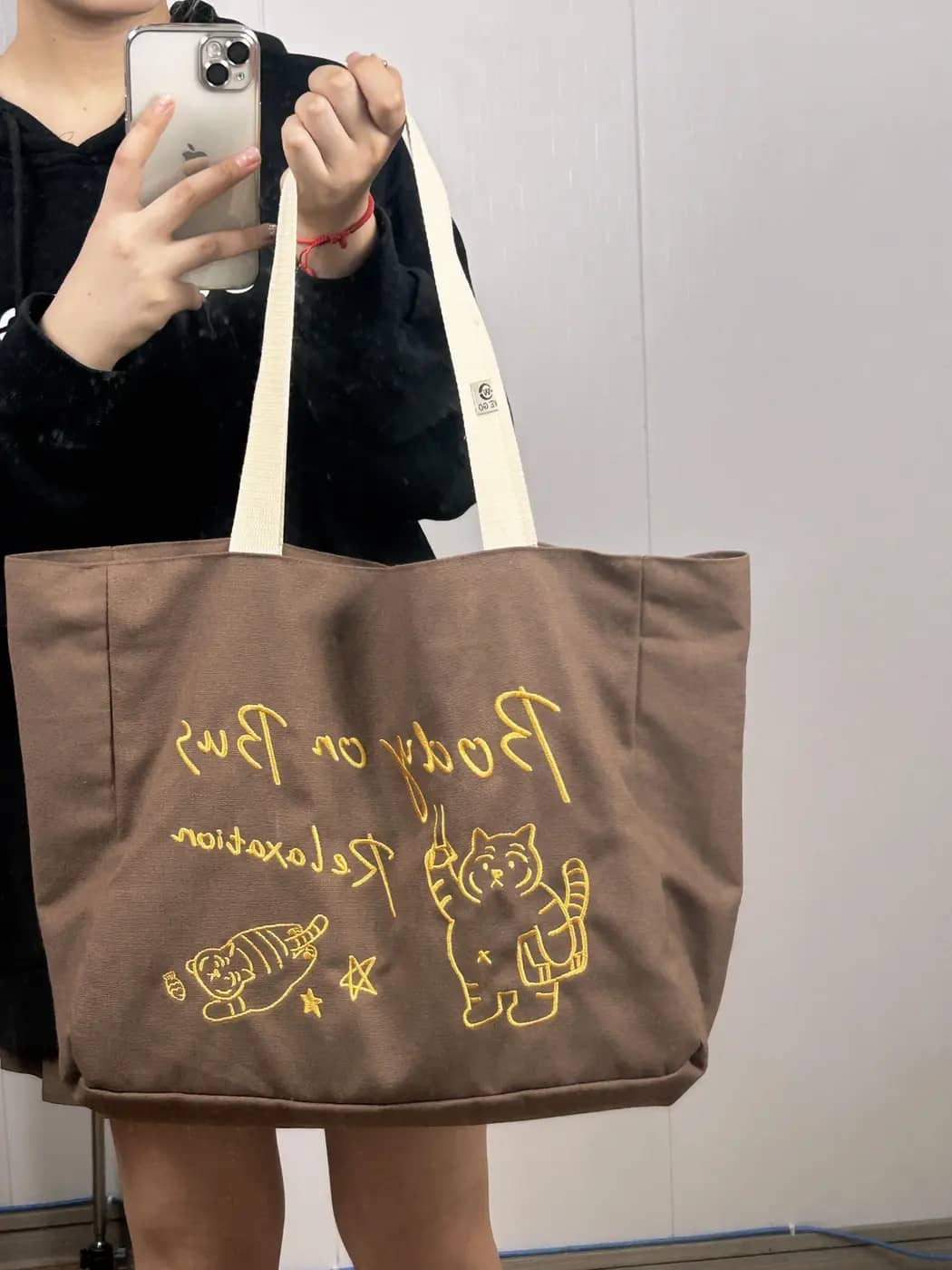 12–16 oz
- Holds its shape on the shelf
- Crisper print edges, less ink show-through
- Feels premium — customers keep it longer
In our experience, the jump from 8 oz to 10 oz gives the most visible quality improvement for the least money. Going from 12 oz to 16 oz is mainly about structure — the bag can stand on its own, which matters for retail displays and laptop totes.
How much weight can each canvas carry?#
Buyers often ask for a load rating. The honest answer: the handles and stitching usually fail before the fabric does. The figures below assume a 38 × 42 cm tote with 2.5 cm self-fabric handles, cross-box (X) stitching and double-folded seams.
| Canvas weight | Safe everyday load | Recommended handle reinforcement |
|---|---|---|
| 8 oz | 5–8 kg | Single box stitch |
| 10 oz | 8–10 kg | Box + X stitch |
| 12 oz | 10–15 kg | Box + X stitch, handle continues under the bag |
| 16 oz | 15–20 kg | Bar-tack or riveted handles, reinforced base panel |
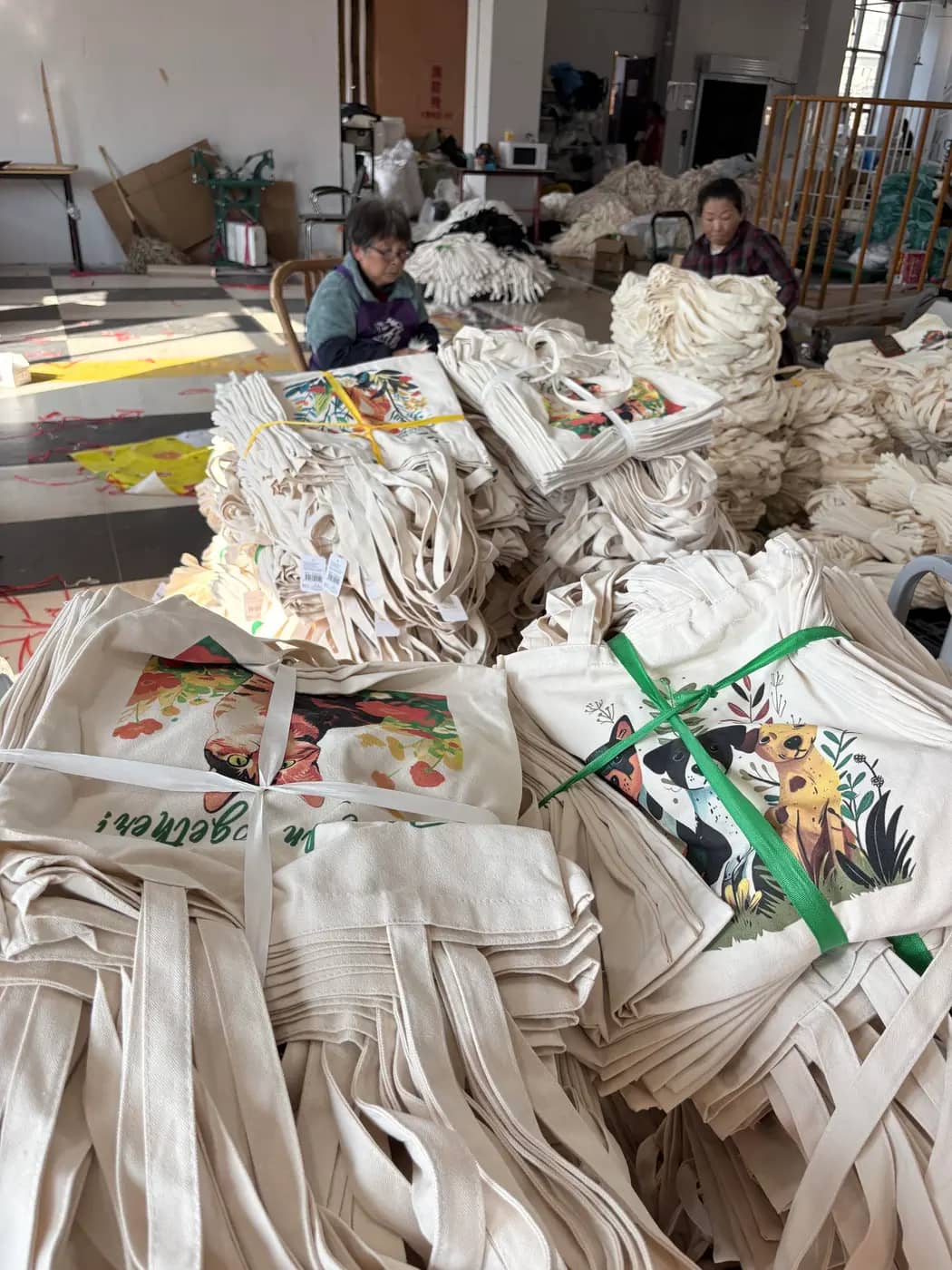
Video
Watch: sewing canvas totes on our production line
See how seams and handles are sewn and reinforced. Stitch density and seam allowance are checked on every batch.
How canvas weight affects printing#
- Screen printing: 10 oz and up gives the cleanest edges. On 8 oz, large solid areas can feel stiff and ink may show through to the inside.
- Heat transfer / DTF: works on all weights; heavier canvas gives a flatter, smoother surface for the transfer.
- Embroidery: use 12 oz or heavier, otherwise the fabric puckers around dense stitching.
- Leather patches & rivets: need 12–16 oz so the hardware has something solid to grip.
How to choose the right weight#
Event giveaway
8 oz — lowest cost, light to ship in bulk.
Retail or merch
10–12 oz — the best balance of feel, print quality and price.
Daily heavy carry
12–16 oz with reinforced handles.
Premium / structured
16 oz+, often with leather patch or zipper.
Next, think about certifications. If you sell in Europe or to children's brands, ask for fabric tested to OEKO-TEX® STANDARD 100. For organic claims, the fibre must be certified under GOTS. Certified fabrics are available in all common weights but add lead time.
Weight, price and shipping#
Fabric is usually the largest single cost in a canvas tote, so weight moves price. As a rule of thumb from our quotes, each step up (8 → 10 → 12 oz) adds roughly 8–15% to the unit price of a simple tote. Heavier bags also ship heavier: 1,000 bags in 16 oz canvas can weigh twice as much as the same order in 8 oz, which matters for air freight.
Want to see every cost driver? Read our custom tote bag cost guide, or compare materials in cotton vs jute vs non-woven.
Checklist before you approve the sample#
- 1Confirm the fabric weight in g/m² on the quote and purchase order.
- 2Check the colour (natural, bleached white or dyed) against a physical swatch.
- 3Press the print area — it should feel flat, not cracked or rubbery.
- 4Load the sample with the weight you expect customers to carry and lift it ten times.
- 5Look inside: seams should be folded twice with no loose threads.